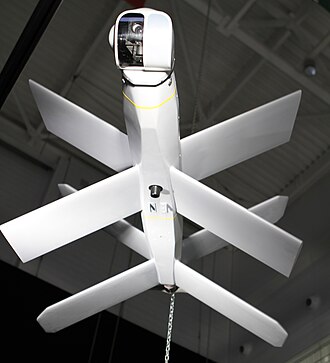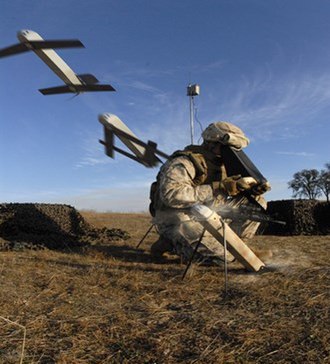
AeroVironment Switchblade 300 / 600
AeroVironment · United States
Not rated
Price on request
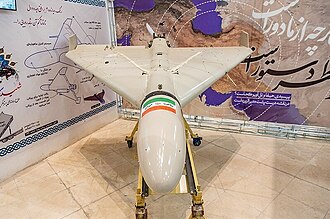
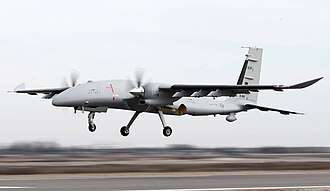
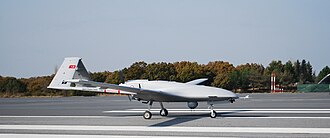
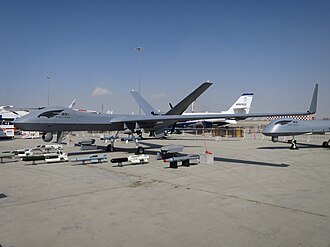
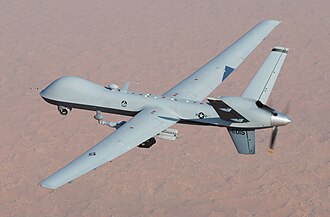
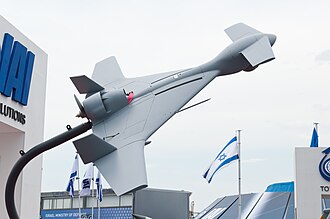
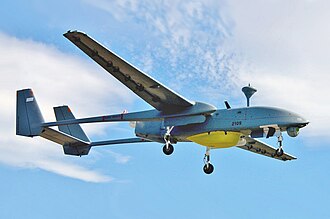
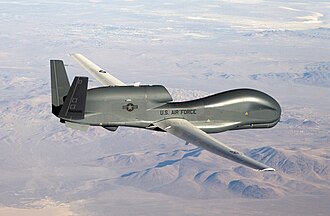
Unmanned aerial vehicles (UAVs) break the classic dependency between "a pilot in a cockpit" and "a sensor or weapon over the target." A UAV system always consists of three components that together form a closed loop: the aircraft itself (airframe + propulsion + payload), the ground station (Ground Control Station, GCS) where the operator sits, and the datalink — usually a combination of a line-of-sight C-band radio (up to ~200 km) and a satellite link in Ku- or Ka-band for "beyond line of sight" (BLOS) operations spanning continents. This three-headed architecture means a UAV is not simply lost when the datalink is lost: modern systems fly back automatically to a pre-defined "lost-link" point via inertial navigation + GPS/GNSS backup. UAVs fall into five functional classes, each with its own flight profile and sensor package. Tactical ISR drones (small, short flight, low-altitude) deliver imagery to a platoon or company and are usually hand-launched; examples are the RQ-11 Raven and Black Hornet. MALE (Medium Altitude Long Endurance, ~5,000–15,000 m altitude, 24+ hours endurance) is the workhorse of today's drone war: the Reaper, TB2, Heron and Wing Loong operate in this class and combine ISR with precision strikes via Hellfire- or MAM-L-class munitions. HALE (High Altitude Long Endurance, ≥18,000 m, ≥30 hours) is the strategic ISR layer — Global Hawk and Triton fly above common air defenses and deliver wideband sensors (SAR radar, MTI, SIGINT payloads) over entire theaters. Loitering munitions are single-use "crosses between drone and cruise missile": they fly around, find a target with an optical or anti-radiation seeker, and then dive on it. Finally there are one-way attack drones (Shahed-class): cheap, propeller-driven, with long range and a fixed warhead, deployed as the Iranian-Russian "cost imposer" against civilian and energy infrastructure. The guidance and effector chain has multiple steps: detect (EO/IR ball, SAR radar, ESM receiver), classify (operator + AI assistance), target (laser designator or GPS coordinates), attack (Hellfire laser-riding, GBU-39 SDB, or MAM-L tandem warhead) and battle damage assessment via the same sensors. The crucial vulnerability of the entire category is the datalink: as soon as an adversary deploys RF jamming (Krasukha, Repellent) or GPS spoofing, the entire chain falls away or the aircraft drifts off course. That is why modern drones are equipped with inertial navigation, anti-jam GNSS antennas (CRPA), optical "terrain-matching" navigation and — in Replicator-class drones — autonomous target recognition via on-board AI.
15 systems
AeroVironment · United States
 🔒 Restricted
 🔒 Restricted
General Atomics · United States
Northrop Grumman · United States