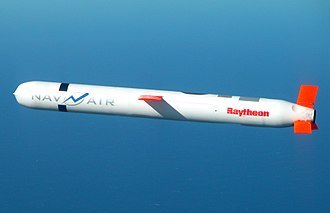
Ballistic Missiles and Cruise Weapons
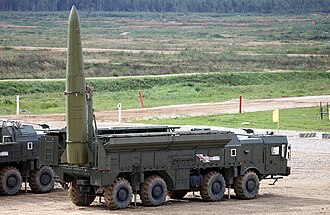
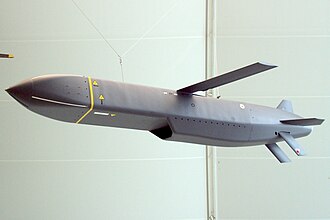
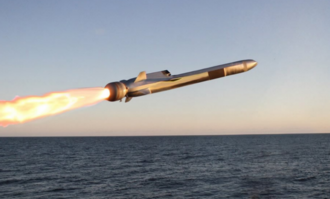
Long-range strike weapons fall into three fundamentally different classes, both physically and doctrinally. Cruise missiles are essentially pilotless jets: a turbofan or turbojet engine (with booster for sea/land launch), a wing that unfolds after launch, and a guidance system that follows a low-altitude path (terrain-following, 30–300 m altitude) to complicate radar detection. Speeds are typically subsonic (Mach 0.7–0.85) — Tomahawk, Storm Shadow, JASSM. They have long range (500–2,500 km) and high precision (CEP <10 m) thanks to TERCOM (terrain-contour-matching), DSMAC (digital scene matching) and GPS/INS fusion. Ballistic missiles leave the atmosphere in the boost phase, fly a suborbital arc in mid-course (no propulsion, only ballistics), and re-enter their warhead in the terminal phase at speeds of Mach 5–25. They are fast but predictable: their trajectory is largely determined by first-order physics once the booster cuts off. Hypersonic glide vehicles (HGVs) combine rocket boost with aerodynamic gliding within the upper atmosphere (40–100 km) at speeds of Mach 5–10, and can maneuver during this glide phase — making their final location unpredictable until the last moment and putting classic ABM systems in trouble. The guidance chain for cruise missiles consists of layers of fallback: GPS/INS for the entire flight, TERCOM for mid-course (the missile continuously compares its radar altitude against a digital terrain model), DSMAC for terminal (an EO/IR camera compares the scene with a stored template), and — in modern missiles like JASSM-ER — a datalink for in-flight retargeting. For ballistic missiles, guidance is simpler: INS in boost (gyroscopes + accelerometers while motors are firing), passive mid-course (only Keplerian mechanics), and an optional active radar or IIR seeker for terminal precision against mobile targets (DF-21D anti-ship, Iskander-M). The strategic balance in this category is determined by arms-control regimes that have now almost all collapsed: the INF Treaty (1987–2019, banning land-launched 500–5,500 km missiles) was withdrawn by Trump in 2019 over Russian 9M729 cheating; New START (2010, capping each side at 1,550 strategic warheads) was "suspended" by Putin in Feb 2023; the Open Skies treaty (2020) and the Treaty on the Non-Proliferation of Nuclear Weapons (NPT) are under pressure. MTCR Category I (≥300 km range, ≥500 kg payload) carries a "presumption of denial" and has held up exports of Tomahawk, ATACMS and MQ-9 for years; the AUKUS deal of 2021 marked a precedent in which the US-UK sold Tomahawk to Australia — previously unthinkable outside Five Eyes.
13 systems
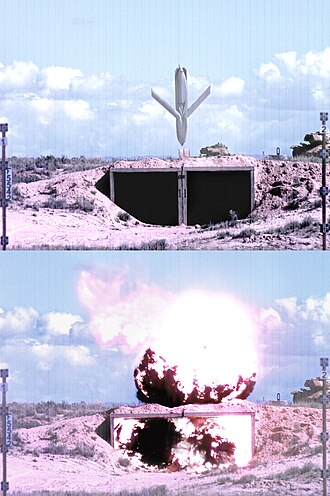
 🔒 Restricted
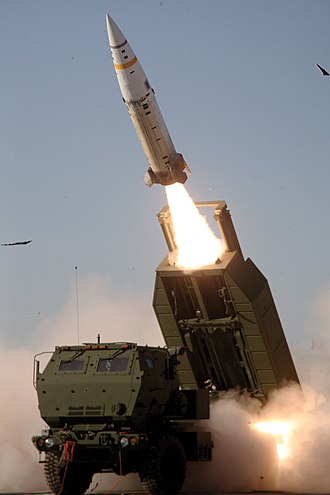
 🔒 Restricted
 🔒 Restricted
Shahab / Fateh / Khorramshahr (Iran), Shaheen / Babur
Shahab · Pakistan
Not rated
Price on request