
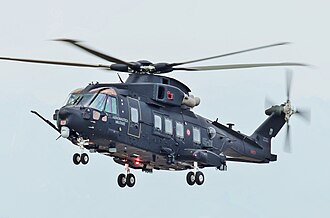
AgustaWestland AW101 / AW139M / AW149
Leonardo (AgustaWestland) · Italy
Not rated
Price on request
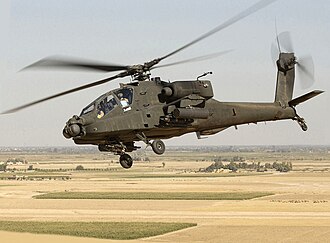
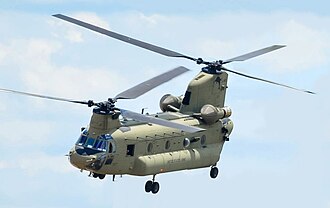
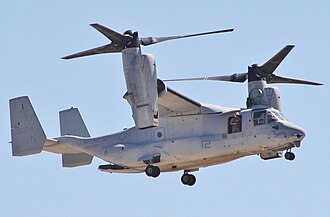
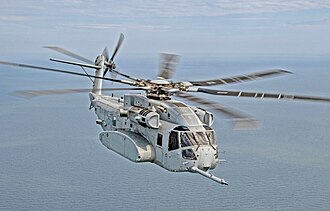
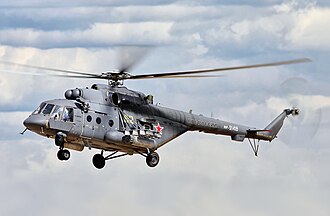
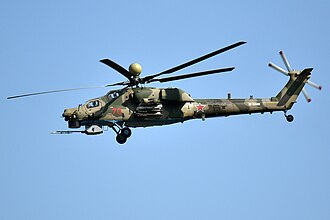
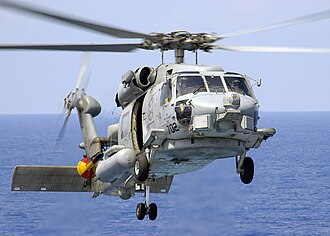
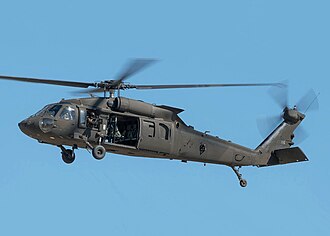
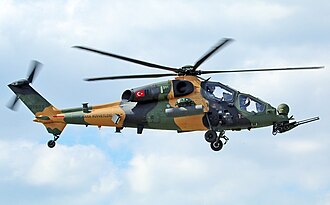
Military helicopters fall into four main categories, each with its own aerodynamic and mechanical trade-offs. Attack helicopters (Apache, Viper, Tiger, Mi-28, Ka-52) are narrow two-seat platforms with a heavy weapons package and armor; thanks to the tandem cockpit layout (pilot in front + gunner behind, or vice versa), the frontal RCS is small. Their backbone is a mast- or nose-mounted sensor package — the Apache's mast-mounted Longbow radar is the archetypal multi-target tracker — combined with a stabilized EO/IR ball and laser designator for Hellfire/JAGM/Spike-NLOS. Transport helicopters (Black Hawk, Chinook, NH90, Mi-17) are wide-body utility platforms with two to four crew + up to 50 troops or heavy lift. Naval helicopters (MH-60R Seahawk, NH90-NFH, Wildcat) have a specialized mission suite for anti-submarine work (dipping sonar, sonobuoy launchers, MAD), anti-ship (Sea Skua, Penguin, Marte), and SAR. Heavy-lift / amphibious (CH-53K, CH-47F) operate in a separate weight class (>20-ton lift) and are crucial for logistics in austere areas. Aerodynamically, all conventional helicopters work on the same principle: a main rotor generates lift and thrust through asymmetric airfoil rotation (the rotor disc tilts in the desired direction via collective and cyclic pitch input), while a tail rotor or NOTAR (No Tail Rotor) system counters the torque. Coaxial rotor systems (Ka-52, Ka-32) eliminate the tail rotor by stacking two counter-rotating rotors — higher thrust efficiency but greater mechanical complexity. Tilt-rotor (V-22 Osprey) is its own category: in flight, two rotors swivel from vertical to horizontal, allowing the Osprey to reach airplane speeds (500+ km/h) while retaining helicopter VTOL capability.
13 systems
Leonardo (AgustaWestland) · Italy
 🔒 Restricted
Mil/Russian Helicopters · Russia
 🔒 Restricted