Artillery
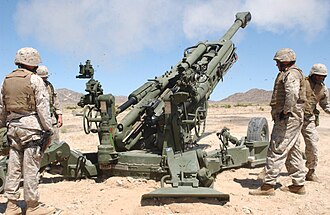
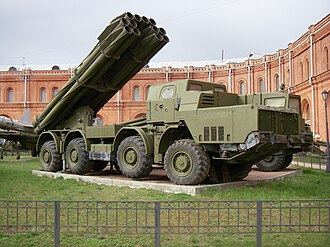
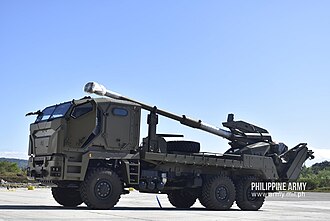
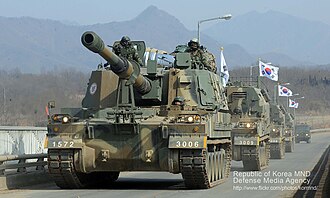
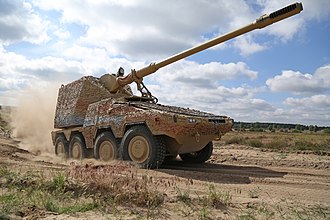
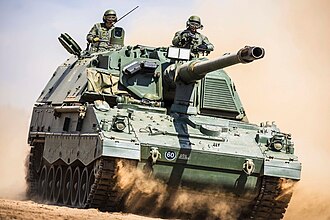
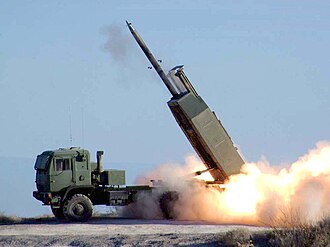
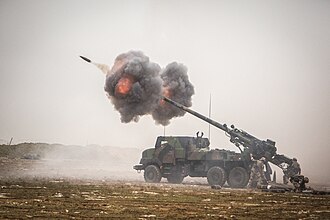
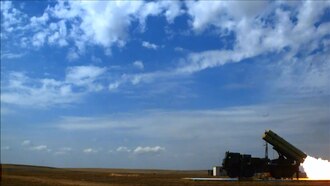
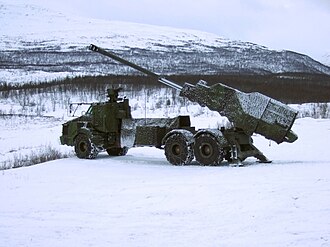
Artillery has regained a central role in modern warfare since 2022 — the "ammo war" in Ukraine has made production capacity as important as performance specs. Three technology segments dominate: towed howitzers (M777, FH-77, M119), self-propelled (SP) howitzers (PzH 2000, K9, CAESAR, M109A7, Archer, RCH 155), and multiple launch rocket systems (HIMARS, M270, BM-30 Smerch, PULS, K239 Chunmoo). Ballistics and calibers. The Western standard is 155 mm, with 39 or 52-caliber tube lengths (155 × 39 = 6.05 m barrel for the M777; 155 × 52 = 8.06 m for the PzH 2000). Longer barrel = higher muzzle velocity = greater range. With standard HE rounds, range is ~24 km (39-cal) or ~30 km (52-cal); with BB+RAP (base-bleed + rocket-assisted projectiles) up to 40 km; with Excalibur GPS-guided rounds ~50 km with CEP <10 m; with V-LAP / RAP-ER in modern 52-cal howitzers up to 70 km. The Russian standard is 152 mm (2S19 Msta-S, 2S35 Koalitsiya). Smaller calibers (105 mm in M119, 122 mm in 2S1 Gvozdika, 120 mm mortar in many systems) cover lighter/shorter-range roles. MLRS architecture is fundamentally different. Instead of one precise round per minute, MLRS systems fire 6–12 rockets in <60 seconds to saturate an area. Modern Western MLRS (HIMARS, M270A2, PULS) are precision-guided: GMLRS rockets carry GPS+INS and a CEP <2 m at 70 km. ATACMS (see 3.5) is an MLRS-launched SRBM (one missile per pod instead of 6). K239 Chunmoo and PULS are modular: the same launcher can fire 122 mm, 130 mm, 227 mm or 300 mm rockets by swapping pods.
11 systems