Space / Satellite Capabilities
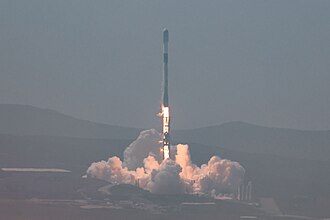
Military space capabilities fall into four main categories that together deliver "C5ISR from space": navigation (PNT — Position, Navigation, Timing — GPS, Galileo, GLONASS, BeiDou), communications (SATCOM in X-, Ka-, UHF and optical bands), observation (optical in panchromatic and multispectral, plus SAR — Synthetic Aperture Radar), and early warning (infrared detection of missile launches). A fifth, emerging category is counter-space — ASAT weapons and orbital-disruption capabilities. Military satellites fly in three orbits: LEO (Low Earth Orbit, 200–2,000 km — observation, SAR, communications constellations like Starlink/Starshield), MEO (Medium Earth Orbit, 2,000–35,786 km — GPS constellations at ~20,000 km), and GEO (Geostationary, 35,786 km — communications and early-warning satellites "hovering" above a fixed point on the equator). LEO has seen revolutionary growth in the past five years thanks to SpaceX launches: a Starlink satellite costs ~USD 250,000 to build plus marginal launch costs as a rideshare; compare that to a traditional DSP early-warning GEO satellite that costs ~USD 1 billion. ASAT doctrine. Although the Outer Space Treaty (1967) bans WMDs in orbit, direct-ascent ASATs and satellite-inspector ("co-orbital") capabilities are not explicitly prohibited. Four states have conducted kinetic ASAT tests: the US (USA-193 2008), Russia (Kosmos 2542 inspector + Nudol test 2021), China (FY-1C 2007 — a gigantic debris field still in orbit years later), and India (Mission Shakti 2019). Since 2022, under UN General Assembly auspices, the international community has adopted a growing "no-debris-creating ASAT-test" norm that has led the US, Canada, France, Germany, UK, Japan, ROK and Australia to follow suit with voluntary moratoria — Russia and China have not.
5 systems
 🔒 Restricted
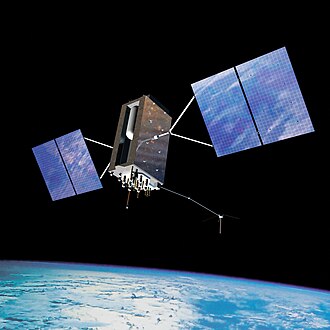
Lockheed/Northrop GPS III, SBIRS, Next-Gen OPIR
Lockheed/Northrop · United States
Not rated
Price on request