Special Systems (laser, railgun, hypersonic)
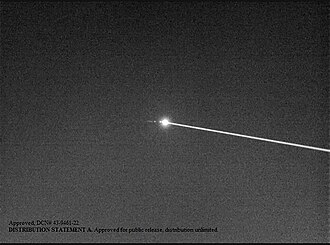
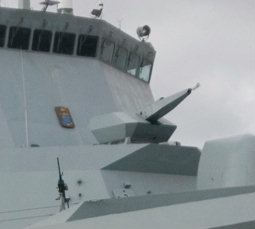
The "special systems" segment covers directed-energy weapons (laser, microwave), railguns and hypersonic weapons — three technologies that have been in research for decades but are only crossing operational thresholds in the 2020s. Lasers work by focusing a concentrated stream of photons on a single point until the material melts, burns or fails structurally. Key specs: power (10 kW = drone, 50 kW = mortar round, 100 kW = cruise-missile target, 300+ kW = larger targets), beam quality (M² near 1 ideal), and pointing accuracy (microradian level). Advantage: cost per shot ~USD 1–10 (electricity only). Disadvantage: line-of-sight required, atmospheric absorption and thermal blooming reduce range, and dwell time is 1–5 seconds per target. HPM (High-Power Microwave) creates a short EM pulse that destroys electronics in an area — ideal against drone swarms, since a single pulse hits multiple targets at once and no beam aiming is needed. Railguns accelerate a metallic projectile to Mach 6+ via Lorentz force, theoretically with a range >300 km without explosives; however, rail wear and power demands (gigawatt pulses) led the US Navy to halt its program in 2021. Hypersonic weapons were already discussed in section 3.x. Key recap: not every "Mach 5+" weapon is a true maneuvering hypersonic; the hardest technological challenge is a scramjet that sustains continuous combustion at Mach 6–9 (HACM, AGM-183 ARRW follow-on) or a Hypersonic Glide Vehicle that can maneuver laterally over 50–100 km during the glide phase (DF-17, Avangard).